Blog · Music & Dance
What Makes a Great Latin DJ: Reading the Room
A great Latin DJ knows when to turn up the energy, make room for connection, and give a New York dance floor exactly what it needs.
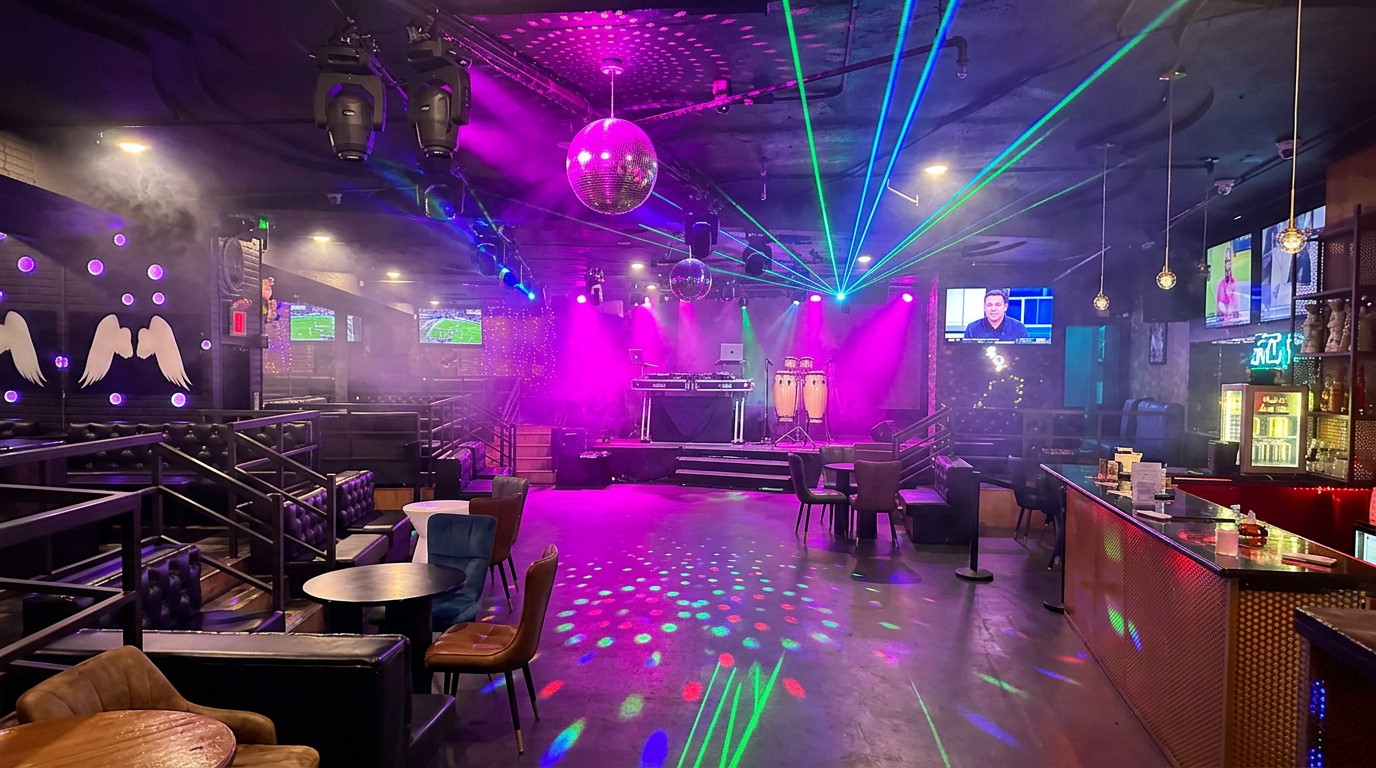
You can feel it when a DJ understands the room. Friends stop debating whether to dance and put their drinks down. A couple finds space for a bachata without turning the floor into a private performance. Someone hears the opening of a reggaeton favorite and gives their friend that look: we are not sitting this one out.
That feeling is not just the result of good songs. If you are wondering what makes a great Latin DJ, start with attention: to the dancers, to the hour, and to the difference between a crowd that needs encouragement and one that is ready to explode. In New York, where people bring different musical memories and dancing styles into the same room, that attention matters.
Reading the room means watching people, not just counting them
A packed floor is useful feedback, but it is not the whole story. A strong DJ notices how people are moving. Are they dancing through the whole song or leaving after the familiar chorus? Are couples settling into the rhythm? Is the back of the room bouncing while the front stands still?
Those details help distinguish recognition from connection. A huge intro might get everyone cheering, but if the next transition breaks the mood, the moment disappears. Reading the room means watching what happens after the cheer.
It also means noticing who has not joined yet. The group near the edge might be waiting for something familiar, not resisting the party. A well-placed Latin classic can offer an easy way in without making everyone already dancing feel interrupted.
The best adjustment is often subtle: one more accessible track, a little more breathing room, or a change in rhythm before fatigue becomes obvious.
A great night has an arc, not one permanent peak
A DJ who plays every biggest record immediately leaves little room for the night to develop. The opening stretch should make arriving feel good: enough rhythm to catch your attention, enough space to greet friends, and a clear invitation to start moving.
That does not mean early music should be disposable. For a grown crowd, the beginning can be one of the best parts of the night. You can hear a song properly, find your place in the room, and dance before the floor gets tight.
As more people arrive, a thoughtful DJ builds momentum rather than simply increasing volume. Familiar hooks, stronger percussion, and a run of tracks that share a mood can do more than a sudden dramatic drop.
Later, the room may need release rather than escalation. A bachata sequence or a singalong classic can keep people emotionally engaged while changing the physical effort. A good reset is still part of the party.
Old school reggaeton needs more than recognizable hooks
There is a reason old school reggaeton can pull a scattered group together so quickly. The rhythms and choruses carry memories: teenage parties, college nights, long car rides, and songs people know without remembering when they learned them.
A skilled DJ respects that familiarity. Sometimes the crowd wants the verse, not just fifteen seconds of the hook before another track arrives. Fast mixing can be exciting, but constant interruption makes it hard to settle into a groove.
Selection matters within the genre, too. Some tracks invite close dancing; others work better for a whole group shouting the chorus together. Treating them as interchangeable misses the social energy of the floor.
Requests offer clues, but they are not commands. If you ask for a song, keep it brief and friendly, then let the DJ find the right moment. A request that would work beautifully later might flatten the sequence playing now.
Switching genres without losing the dancers
A Latin night can move through reggaeton, afro house, bachata, salsa, merengue, and classics without feeling scattered. The connective tissue is not always tempo. It might be percussion, warmth, a recognizable vocal, or simply a well-timed change after the room has enjoyed one rhythm long enough.
For listeners exploring afro house NYC nights, a longer groove can offer a different kind of pleasure from rapid-fire singalongs. The gradual layering gives dancers time to find their movement. Cutting away too quickly can erase the very thing that makes the track work.
Partner dancing brings another consideration. People looking for bachata dancing New York options may want enough uninterrupted music to connect with a partner. Likewise, dancers familiar with the salsa NYC scene can appreciate a DJ who lets a musical phrase resolve rather than chopping through it for a flashy transition.
A mixed-format party is not a dedicated social for any one dance. Still, giving each style a meaningful stretch helps everyone feel included. Merengue can be an especially welcoming bridge: direct, energetic, and easy for friends with different skill levels to enjoy together.
Technical skill should serve the feeling
Clean transitions matter because they keep dancers comfortable. An awkward clash can make even people who know nothing about DJ equipment lose their footing. But technical precision is only useful when it supports the music and the room.
A smooth blend into the wrong song is still the wrong choice. Meanwhile, a deliberate pause before a beloved opening can be exactly right. Great DJs know when continuity helps and when a clear change deserves its own entrance.
Sound balance matters, too. Bass should give the music weight without swallowing the vocals or turning everything into a blur. The venue and sound system affect this, so not every sound issue is the DJ’s alone to solve.
You do not need technical vocabulary to evaluate the result. Ask yourself: can I hear the rhythm, recognize the song, and keep dancing without every transition demanding my attention? When the answer is yes, the craft is doing its job.
New York brings several dance floors into one room
Latin nightlife NYC is not one uniform scene. A group arriving from the Bronx may have different favorites from friends coming from Washington Heights, Brooklyn, or Queens. Musical taste also varies within every neighborhood, household, and generation. A thoughtful DJ listens for preferences rather than assigning them by appearance or age.
That is especially important in a 30+ room. Grown does not mean quiet, and upscale does not mean nobody sweats. It can mean wanting a night that feels intentional: music with personality, room for connection, and energy that does not depend on nonstop microphone interruptions.
Latin After Dark NYC is a grown, upscale Latin nightlife experience for a 30+ crowd, with a musical range that includes old school reggaeton, afro house, bachata, salsa, merengue, and Latin classics. That breadth makes thoughtful programming important. The goal is not to prove how many genres fit on a playlist; it is to make their movement feel natural.
Help make the floor a place people want to stay
The DJ shapes the night, but dancers help create it. A generous floor makes it easier for newcomers to join and experienced dancers to enjoy themselves without competing for space.
A few practical habits make a real difference:
- Ask before starting a partner dance, and accept a no without negotiating.
- Keep turns compact when the floor gets crowded. Save big traveling patterns for open space.
- Move drinks off the dance floor when possible, and alert staff to spills.
- Give people room to dance solo or with friends without assuming they want a partner.
- Step aside for conversations rather than stopping in the middle of a moving crowd.
Plan your arrival with the same care. Check published door times rather than guessing when the music begins. Arriving earlier can give you time to settle in and hear the DJ build the night.
For Astoria, the N and W serve parts of the neighborhood, while the M and R serve the Steinway Street area. Your best route depends on the venue’s exact location and current service. Check the address and weekend MTA updates before leaving, including your trip home. No transition is smooth enough to fix discovering your train is rerouted at the end of the night.
Bring your dancing shoes this Saturday, October 3
The next time you look for a Latin party New York City can make worth the trip, listen beyond the first familiar song. Notice whether the DJ gives the room somewhere to go—and whether you want to follow.
Join the upcoming DOLLHOUSE event on Saturday, October 3, at The Zone NYC in Astoria, Queens. [Find tickets and event details here](/events/dollhouse-october-3), gather your people, and come ready to dance.