Blog · Music & Dance
Dembow, Reggaeton and Perreo: What Is the Difference?
Learn how dembow, reggaeton and perreo connect, what sets them apart, and how to find your rhythm on a New York dance floor.
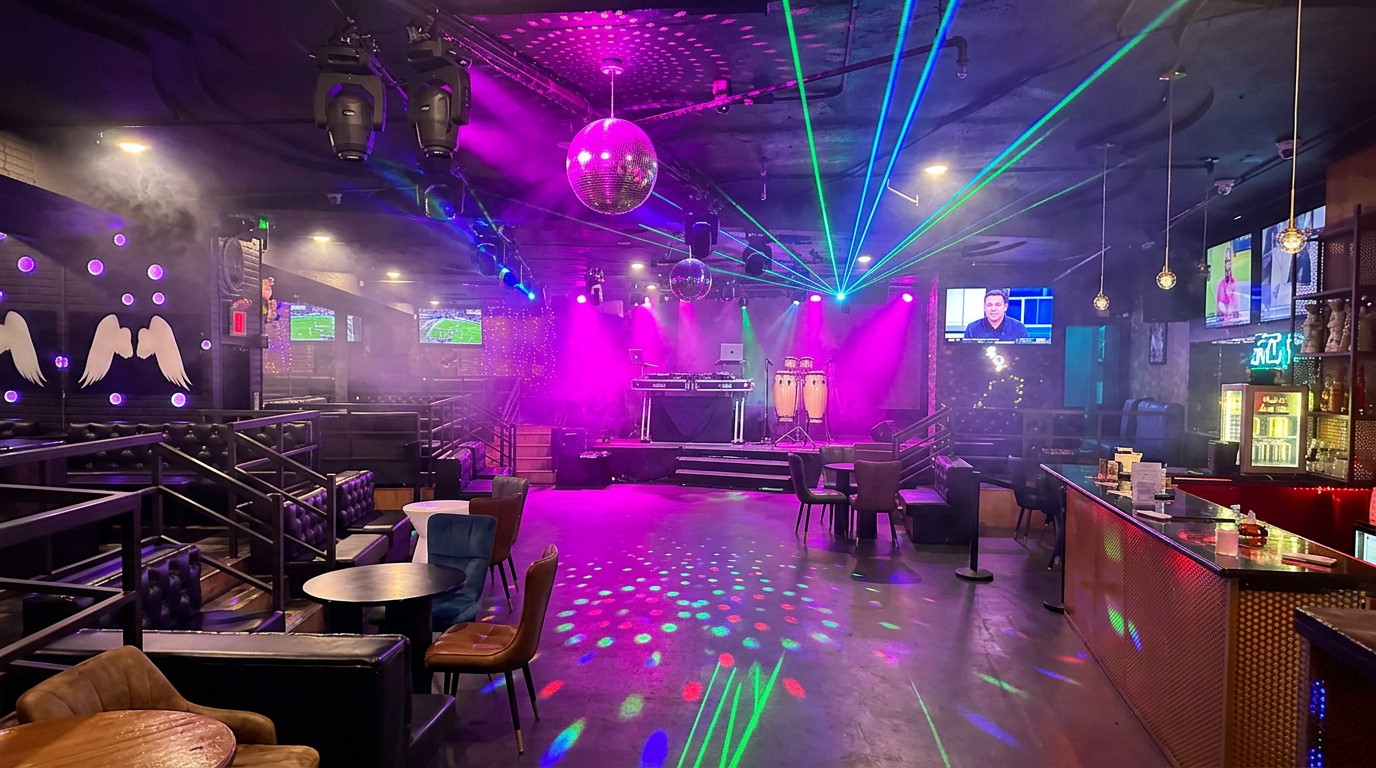
You know the moment: the drums land, someone recognizes the opening seconds, and a dance floor that was politely swaying suddenly gets louder. You might call the music reggaeton. Your friend might say dembow. Someone else announces that it is time for perreo. All three can belong in the same conversation, but they do not mean exactly the same thing.
Understanding dembow, reggaeton and perreo is less about passing a music-history test and more about knowing what you are hearing—and how you want to move. In New York, where a single night can travel through Dominican, Puerto Rican, Jamaican and broader Caribbean influences, those distinctions make the party more interesting. Here is how to hear the differences without turning your Saturday into homework.
The quick distinction: rhythm, genre and dance
The simplest answer is that reggaeton is a musical genre, perreo is a dance practice associated with it, and dembow can refer to either a rhythmic foundation or a distinct Dominican musical genre. That double meaning is where much of the confusion starts.
When someone talks about the dembow rhythm in reggaeton, they mean a recognizable, syncopated drum pattern and its variations. When someone says they want to hear Dominican dembow, they are usually asking for a particular sound: brisk, repetitive, rhythm-forward music with its own artists, vocabulary and scene.
Perreo describes dancing, not a separate genre. It can be solo, between partners or part of a group responding to the same groove. Close-contact movement is common, but it is not a requirement for participating.
Keep this little map in your pocket:
- Reggaeton: the broader musical genre, with room for rap, melody, romance and club records.
- Dembow rhythm: a foundational rhythmic reference heard throughout reggaeton.
- Dominican dembow: a distinct genre that puts sharp percussion, repetition and rhythmic vocal delivery up front.
- Perreo: a way of dancing and, in casual nightlife language, a shorthand for a particular dance-floor mood.
Where the shared rhythm comes from
These sounds did not develop inside sealed borders. Jamaican dancehall, Spanish-language reggae in Panama, and Puerto Rico’s underground music networks all matter to the story of reggaeton. Recordings, riddims and ideas traveled through migration, parties, mixtapes and collaboration.
The word dembow is closely associated with Shabba Ranks’s 1990 recording “Dem Bow.” Its rhythmic lineage became an important reference point for music that followed. That does not mean every reggaeton song copies one recording, or that one track explains the entire genre. Producers have reworked these rhythmic ideas extensively.
Puerto Rican artists and producers helped shape reggaeton into a distinct musical movement, combining Spanish-language delivery, dancehall influences, hip-hop and evolving production. Dominican dembow developed its own identity through local experimentation and exchange with those wider Caribbean sounds.
New York is part of that circulation, not just a place where the finished music arrives. Across the city’s Caribbean communities, these records live alongside family favorites, neighborhood sounds and newer releases. A familiar rhythm can carry different memories for people standing on the same dance floor.
What reggaeton sounds like on a night out
Reggaeton gives a DJ plenty of room to change the temperature. One record might lean on a sung chorus and leave space for everyone to join in. The next might have clipped verses, heavier percussion and a groove that pulls attention back toward the floor.
For many dancers, old school reggaeton brings an especially immediate response. Records associated with Daddy Yankee, Ivy Queen, Don Omar, Tego Calderón and Wisin & Yandel can trigger recognition before the chorus arrives. People turn toward their friends, mouth the words and move with a confidence that has little to do with formal technique.
“Old school” is a flexible label rather than a precise cutoff. In nightlife conversation, it often points toward earlier eras of reggaeton, especially the records that helped define its major commercial breakthrough. Two people can use the term and have slightly different playlists in mind.
Listen for the relationship between the drums and the vocal. Reggaeton often lets you settle into a sustained groove while the song changes around it. You can stay small through the verse, open up at the chorus or simply bounce beside your friends. There is no obligation to perform every lyric physically.
How Dominican dembow changes the energy
Dominican dembow often feels more insistent: tight percussion, repeated phrases, punchy vocal rhythms and forward momentum. Compared with many reggaeton records, it can sound faster and more stripped down, though neither genre follows one fixed tempo or production formula.
That repetition is not an absence of ideas. It creates anticipation. A short phrase becomes a cue; a rhythmic break gives dancers something to answer. Artists such as El Alfa and Chimbala offer recognizable entry points, but no single performer represents the whole genre.
On the floor, you may notice quicker weight changes, animated footwork and playful exchanges between friends. Some dancers keep their upper bodies relaxed while their feet do the work. Others respond with their whole bodies. Watch for a few bars before deciding that you need to move at maximum intensity.
If you are new to the sound, start with a gentle bend in your knees and a small side-to-side weight shift. Find the pulse first. You do not need to chase every percussion hit, and you certainly do not need to copy a difficult move in a crowded room.
Perreo is movement, not permission
Perreo is closely linked to reggaeton’s physical vocabulary: grounded movement, bent knees, hip articulation and an emphasis on the lower body. It can be sensual, funny, expressive or deliberately theatrical. It is not automatically an invitation to touch.
Solo perreo is completely valid. So is dancing face-to-face without contact, moving with friends or choosing a comfortable distance from a partner. Clothing, confidence and the lyrics playing overhead do not establish consent.
If you want to dance with someone, make eye contact and ask. In a loud room, a clear gesture can start the conversation, but do not treat an ambiguous smile as agreement to close contact. Let the other person actively choose the distance. If they step away, turn aside or stop engaging, give them space immediately.
For beginners, smaller movement usually feels better than forcing a dramatic pose. Keep your knees soft, avoid locking your lower back and wear shoes that stay secure. Take breaks when you need them. A good night should leave you pleasantly tired, not managing an injury because you tried to match someone else’s range of motion.
Why a New York Latin night crosses genres
A satisfying Latin set does not have to stay in one lane. Bachata can turn the room toward partner connection; salsa introduces different phrasing and footwork; merengue offers an accessible pulse that brings groups together. Afro house may introduce longer builds and layered percussion, changing how dancers occupy the space.
That range matters when you are searching for a night out. Someone typing “afro house nyc” may want extended grooves, while “bachata dancing new york” can signal interest in a partner-dance social. A search for “salsa nyc” might lead toward lessons and social dancing rather than a mixed-format party. Those experiences can overlap, but they are not interchangeable.
Read the actual music description instead of assuming every Latin event offers the same balance. Latin After Dark NYC describes a grown, upscale experience for a 30+ crowd, with old school reggaeton, afro house, bachata, salsa, merengue and Latin classics. That is a mixed musical palette, not a promise that one genre will play all night.
The most useful question is not which genre wins. It is whether you enjoy a room that changes gears—and whether your friends do too.
Plan the trip, then leave room to dance
The practical side of latin nightlife nyc starts before your first drink. Washington Heights and Inwood have deep Dominican cultural roots; the Bronx has essential connections to salsa and hip-hop; Queens brings many communities into close proximity. Neighborhood context enriches a night, but it does not tell you any individual event’s playlist.
For Astoria, the N and W serve major parts of the neighborhood, though service depends on the hour and day. Confirm the venue’s exact location before choosing a stop, and check current MTA service rather than relying on your weekday commute. A neighborhood name alone is not enough to plan the final walk.
Before heading to any latin party new york city listing, check the posted start time, admission requirements and any stated dress policy. If you want space to get comfortable, aim toward the earlier part of the advertised schedule. Do not assume a particular genre or peak moment will happen at a specific hour unless the organizer says so.
Bring only what you can comfortably manage, keep drinks away from active dancers and step off the floor to check your phone. Agree on a meeting point with friends and plan your trip home before everyone’s battery runs low.
Bring your rhythm to an upcoming Saturday
You do not need perfect terminology to have a great night. Hear the groove, respect the people around you and leave room for a song you did not expect to love.
For an upcoming Saturday, join Latin After Dark at DOLLHOUSE, Saturday October 3, at The Zone NYC in Astoria, Queens. [Find tickets and event information here](/events/dollhouse-october-3), gather your people and come ready to dance.